

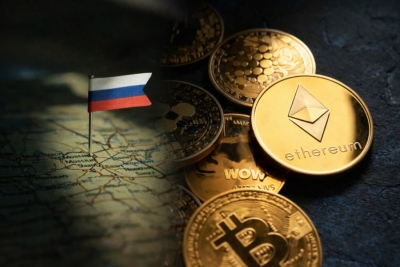
The Russian State Duma is moving to the final examination of a bill that creates the first comprehensive regulatory framework for cryptocurrencies in the country. The draft law recognizes digital assets as a form of property, yet retains the ruble as the sole legal tender, while introducing strict rules for investors, trading platforms, and cross-border payments.
Legal recognition of crypto, but not as currency
The bill "On Digital Currency and Digital Rights," submitted by the Russian government on April 1, 2026, enters its second and third readings in the State Duma on July 21. According to Cointribune, its primary provision is that cryptocurrencies, such as Bitcoin and Ether, gain legal recognition as property assets rather than legal tender. Thus, Russian citizens will be permitted to buy, hold, and sell digital assets, but will not be allowed to use them to purchase goods or services in everyday economic activity. Regulatory oversight of the sector is assigned to the Central Bank of Russia.
Two categories of investors
The new framework categorizes investors into two groups: "qualified investors" and "non-qualified investors." Qualified investors must satisfy specific criteria, such as high net worth, professional experience in financial markets, or specialized certifications recognized by the Central Bank. For retail investors, annual limits on cryptocurrency purchases through licensed platforms are established, along with restrictions on cross-border transfers of digital assets. Conversely, qualified investors will enjoy substantially greater operational flexibility in their transactions.
Mandatory licensing for platforms
The draft legislation stipulates that all cryptocurrency exchanges, digital asset custodians, and brokerage intermediaries must obtain an operating license from the Central Bank of Russia. Licensed platforms will also be permitted to act as tax agents, withholding taxes due on investor gains. Concurrently, a gradual ban on the operation of unlicensed platforms is scheduled to take effect starting in 2027.
Legalization of mining maintained
Cryptocurrency mining remains under the regulatory jurisdiction of the Federal Tax Service rather than the Central Bank. This distinction builds upon legislation signed by President Vladimir Putin in 2024, which legalized crypto mining activity across Russia. The new bill also abandons the original requirement for mandatory disclosure of digital wallet addresses, maintaining only the obligation to report account balances and financial flows.
Targeting international payments despite sanctions
Analysts assess that the timing of this legislative initiative is deliberate. Following Western sanctions and the exclusion of a major portion of the Russian banking system from SWIFT, Moscow is seeking to construct an alternative framework for cross-border payments and international financial transactions. Unlike the US and the European Union, where crypto regulation is integrated into the existing financial system, Russia appears to treat digital assets as a instrument for economic sovereignty and bypassing restrictions imposed by international sanctions. Provided it receives State Duma approval, the majority of the new framework is expected to take effect on September 1, 2026, with implementation rules issued by the Central Bank of Russia.
www.bankingnews.gr












Σχόλια αναγνωστών